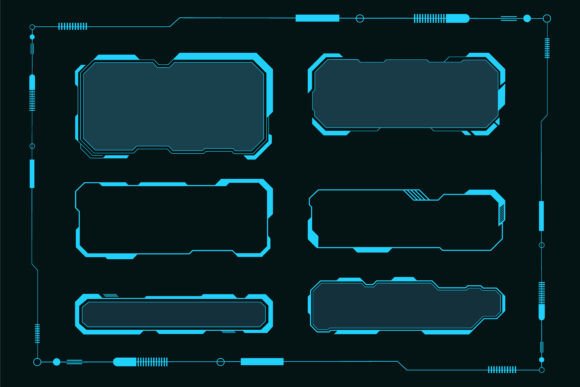
Neon Cyan Tech HUD Frame and Interface Elements for Virtual Reality UI
The Neon Cyan Tech HUD Frame and Interface Elements is a specialized design set tailored for virtual reality (VR) user interface (UI) development. Featuring bright blue neon frames and futuristic cyber window HUD elements, this package offers a visually striking and highly adaptable toolkit for designers and developers working in immersive digital environments. Designed with flexibility in mind, it allows for full customization to suit a wide range of applications and aesthetic preferences.
What Makes Tech HUD Frame and Interface Elements Unique?
This design set is built around futuristic heads-up display (HUD) components, commonly used in VR and augmented reality (AR) interfaces. The Neon Cyan Tech HUD Frame delivers a sleek, high-tech visual language that mimics the aesthetics of sci-fi interfaces seen in modern media. The neon glow and cyberpunk-inspired frames provide a distinctive look that stands out in immersive applications, making it a popular choice among developers aiming for a futuristic UI style.
One of the key features of this set is its fully editable vector design, which allows for precise adjustments without compromising quality. Whether you're designing for a game, simulation, or interactive experience, the ability to resize and modify elements without degradation ensures a professional finish across all platforms and resolutions.
Why Designers and Developers Might Choose This Set
There are several reasons professionals might consider the Neon Cyan Tech HUD Frame and Interface Elements for their projects:
- Visual appeal: The neon blue glow and futuristic design language can enhance the immersive quality of a VR interface, especially in sci-fi or tech-themed applications.
- Customization: With 100 color customization options, users can easily match the HUD to the overall visual style of their project without needing to create assets from scratch.
- Flexibility: The ease of resizing and modifying elements makes this set suitable for both high-resolution displays and mobile VR applications.
- Source file availability: The inclusion of EPS source files ensures that users have full control over the design, allowing for deep customization and scalability.
Key Benefits of Using This HUD Design Set
For UI designers working in VR, time and efficiency are critical. The Neon Cyan Tech HUD Frame and Interface Elements offer several advantages:
- Time-saving: Pre-designed, high-quality elements reduce the need to build UI components from scratch, accelerating the development process.
- Professional quality: Vector-based design ensures clean, sharp visuals across all screen sizes and resolutions.
- Consistency: Using a unified design set helps maintain visual harmony across the entire interface, improving user experience.
Considerations and Tradeoffs
While the Neon Cyan Tech HUD Frame and Interface Elements offer many benefits, there are also some considerations to keep in mind when evaluating this design set:
- Style specificity: The neon aesthetic may not be suitable for all types of applications. Projects aiming for realism, minimalism, or historical themes may find the futuristic look too stylized or out of place.
- Learning curve: While the design set is editable, those unfamiliar with vector editing software may require additional time or training to make full use of its capabilities.
- Color limitations: Although 100 color options are available, some projects may require more nuanced color adjustments that go beyond the provided presets.
When This Design Set Is a Strong Fit
The Neon Cyan Tech HUD Frame and Interface Elements are particularly well-suited for the following scenarios:
- Sci-fi or cyberpunk-themed VR experiences: Games or simulations that take place in futuristic settings benefit from the glowing neon frames and high-tech aesthetic.
- UI prototyping: Designers who need to quickly mock up interfaces for testing and iteration can save time by using pre-built, customizable elements.
- Projects with limited art resources: Independent developers or small teams without dedicated UI artists can leverage this set to maintain a professional look without hiring additional talent.
When Alternatives May Be Worth Considering
While the Neon Cyan Tech HUD Frame and Interface Elements are versatile, they may not be the best fit for every project. Consider alternative UI design approaches in the following situations:
- Realistic or grounded applications: Medical simulations, architectural visualizations, or educational tools may benefit more from clean, minimalistic interfaces that don't distract from the content.
- Custom branding requirements: If a project requires a completely unique visual identity that doesn't align with the neon aesthetic, a custom-designed UI may be more appropriate.
- Non-VR applications: While the set can be adapted for 2D interfaces, its VR-focused design may not be optimized for traditional web or mobile applications.
Practical Insights for Decision-Making
When evaluating whether the Neon Cyan Tech HUD Frame and Interface Elements align with your project's needs, consider the following questions:
- Does the neon aesthetic align with the overall tone and theme of your project? If your application is futuristic or tech-oriented, this design set will likely complement your vision effectively.
- Do you need a ready-to-use UI solution that can be customized quickly? If you're working under tight deadlines or with limited resources, this set offers a practical and efficient way to build a professional interface.
- Are you comfortable working with vector files or do you have access to someone who is? While the set is editable, it may require some familiarity with design tools like Adobe Illustrator to make the most of its features.
- Is visual consistency across your UI important? Using a unified design set helps ensure that all interface elements share a cohesive look and feel, which can improve usability and user satisfaction.
Final Thoughts
The Neon Cyan Tech HUD Frame and Interface Elements offer a compelling solution for designers and developers seeking a futuristic, customizable UI toolkit for virtual reality applications. Its combination of visual appeal, adaptability, and professional quality makes it a strong contender for projects that benefit from a high-tech aesthetic. However, like any design resource, its suitability depends on the specific goals, constraints, and audience of the project at hand.
By carefully evaluating your design needs, aesthetic direction, and technical capabilities, you can determine whether this set is the right choice—or whether an alternative approach might better serve your objectives. Ultimately, the goal is to select tools that enhance both the development process and the final user experience, ensuring that your interface supports the immersive and functional goals of your VR project.